RA → paper map
Choose the activity and role first
This gives a common preparation route, not a licensing determination.
Common preparation route
Representative: Papers 1 + 7 + 8Exemptions, experience and firm arrangements can change the route. Confirm against the current SFC Guidelines on Competence and your compliance team.
Check the current SFC guideline →If your goal is to become a licensed representative at a securities firm, bank or brokerage — dealing in securities for clients, i.e. Type 1 regulated activity — the most common qualification path is to sit HKSI Licensing Examination Paper 1, Paper 7 and Paper 8 together. Searches like "hksi 1 7 8", "licensed representative" and "sfc ra" are usually the same question: why these three papers, what do other RAs require, and how do Representative and Responsible Officer requirements differ. This page puts HKSI LE and the SFC licensing regime on one map.
Why Papers 1, 7 and 8?
The SFC recognises a set of industry qualifying exams for each regulated activity. For a representative in Type 1 (dealing in securities), the most widely recognised combination is Paper 1 plus Paper 7 plus Paper 8: Paper 1 is the Local Regulatory Framework paper laying the regulatory base; Paper 7 and Paper 8 are both Recognised Industry Qualification papers, with Paper 7 mapping the whole financial market and Paper 8 drilling into securities products and trading practice. Together they cover the rules, the markets and the instruments a securities representative uses daily.
Note that the papers required for licensing vary by role (representative vs Responsible Officer), by firm, and by the latest SFC/HKSI rules. Always confirm with your firm's compliance team and the latest SFC and HKSI Institute announcements before registering. For overall exam format, enrolment and study order, see the HKSI LE exam guide.
Beyond Type 1: an SFC RA1–RA13 and RO/LR map
The section above focuses on the three-paper combination for a Type 1 (dealing in securities) representative. But Schedule 5 to the Securities and Futures Ordinance lists regulated activities from RA1 through RA13, and each one carries its own scope of business and its own set of qualifying papers. If your role also touches futures, asset management, corporate finance or another regulated activity, the "1, 7, 8" shortcut does not apply on its own — check the papers required for that specific RA.
Within the same firm, a Responsible Officer (RO) and a Licensed Representative (LR) face different qualification requirements. An LR carries out the regulated activity day to day, so the requirement centres on Paper 1 plus the relevant industry papers. An RO supervises the business and carries greater responsibility for the firm's conduct, and on top of the same industry papers must also sit an additional, more specialised Local Regulatory Framework paper (one of Paper 2–6), usually alongside management experience. The two roles are not interchangeable just because the job titles sound similar.
| Role | Main responsibility | Qualification focus |
|---|---|---|
| Licensed Representative (LR) | Carries out the regulated activity day to day, dealing directly with clients or transactions | Paper 1 (Local Regulatory Framework) + industry qualifying papers for the relevant RA |
| Responsible Officer (RO) | Supervises the business and carries greater responsibility for conduct | Paper 1 + an additional regulatory paper (one of Paper 2–6) + the same industry papers; some roles also require minimum years of experience |
Schedule 5 itself is not static. Type 13 — providing depositary services for a relevant collective investment scheme — took effect on 2 October 2024. Types 11 and 12 remain subject to commencement of their corresponding new regimes. "Listed in the Schedule" and "currently in effect" are two different questions, and it matters which one you are answering.
Virtual-asset business needs a two-step classification. First, ask whether the token itself is a security or futures contract under the SFO. Second, and separately, ask whether the relevant virtual-asset trading platform falls under the AMLO's VASP licensing regime. A non-security token does not, by itself, mean the platform sits outside SFC regulation — the two questions must be assessed independently.
RA-to-papers map: which papers does each RA need?
The table below maps the main SFC regulated activities (RA1, 2, 4, 5, 6, 8, 9, 10) to their HKSI LE paper combinations, split by Licensed Representative and Responsible Officer. Papers 1–6 are Local Regulatory Framework papers; Papers 7–12 are Recognised Industry Qualification papers. An LR generally needs only Paper 1 plus the matching industry paper(s); an RO additionally sits a more specialised regulatory paper (one of Paper 2–6).
| RA type | Scope of business | Papers for LR | Papers for RO |
|---|---|---|---|
| RA1 / RA4 / RA8 | Dealing in securities / advising on securities / securities margin financing | Paper 1 + Paper 7&8 | Paper 1+2 + Paper 7&8 |
| RA2 / RA5 | Dealing in futures contracts / advising on futures contracts | Paper 1 + Paper 7&9 | Paper 1+3 + Paper 7&9 |
| RA6 | Advising on corporate finance | Paper 1 + Paper 7&11 | Paper 1+5 + Paper 7&11 |
| RA9 | Asset management | Paper 1 + Paper 7&12 | Paper 1+6 + Paper 7&12 |
| RA10 | Providing credit rating services | Paper 1 + Paper 7&10 | Paper 1+4 + Paper 7&10 |
| RA3 | Leveraged foreign exchange trading | No HKSI LE paper; a separate leveraged forex trading exam (two papers) run by other providers applies | |
| RA7 | Providing automated trading services | No individual competence paper currently required under the Guidelines on Competence | |
This table reflects the general position. Actual exemptions, new-entrant arrangements and firm-specific requirements can still differ, especially for RA11, RA12 and RA13, which involve newer regimes — verify directly with HKSI Institute or the SFC rather than relying on this table alone.
Format at a glance: questions, time, pass mark
| Paper | Questions | Time | Pass | Focus |
|---|---|---|---|---|
| Paper 1 — Fundamentals of Securities & Futures Regulation | 60 | 90 min | 70% | Regulation, SFO, licensing, conduct |
| Paper 7 — Financial Markets | 60 | 90 min | 70% | Markets, rates, products overview |
| Paper 8 — Securities | 40 | 60 min | 70% | Securities products, trading, settlement |
All three are multiple-choice, computer-based exams delivered bilingually in English and Traditional Chinese, with instant results. Paper 8 has fewer questions but proportionally less time, so per-question pace is not looser. Pass-rate figures floating around are inconsistent and not officially published per paper; rather than chase a percentage, treat the 70% pass mark as the floor and aim for a stable 80%+ for margin.
HKSI 1, 7, 8 exemptions
A common question is "hksi 1 7 8 exemption" — the answer splits into two parts. Paper 1 is a Local Regulatory Framework paper and is generally not exemptible; every applicant sits it in person. Papers 7–12 are Recognised Industry Qualification papers, and holders of an SFC-recognised professional qualification under the Guidelines on Competence (for example CFA, CIIA or CFP) who also meet the relevant years-of-experience requirement may be eligible for exemption from the matching industry paper(s).
| Paper category | Exemption possible? | Note |
|---|---|---|
| Paper 1 (Local Regulatory Framework) | Generally not exemptible | All applicants sit it in person regardless of overseas qualifications held |
| Paper 2–6 (RO regulatory papers) | Generally not exemptible | Additional regulatory requirement for ROs; sat in person as well |
| Paper 7–12 (industry qualification papers) | Depends on qualification and experience | Holders of a recognised qualification (e.g. CFA/CIIA/CFP) with minimum years of experience may apply for exemption from the matching paper(s) |
The list of recognised qualifications, years-of-experience thresholds and the application process itself always follow the SFC Guidelines on Competence and the HKSI Institute's official exemption page — this table is directional only and cannot substitute for an actual application outcome.
Fees and result validity
| Item | General position | Note |
|---|---|---|
| Fee per paper | Differs by exam centre location (local vs overseas) | Fees have been adjusted before; check HKSI's current fee schedule for the exact amount |
| A single paper's pass result | Carries a validity window for use in a licence application | You must complete the required paper combination and apply within that window |
| HKSI certificate | Valid indefinitely once issued | Distinct from an individual result's validity for licence application — don't conflate the two |
"Result validity" and "certificate validity" are often confused: the first is about whether that result can still be used to apply for a licence — a retake may be needed if it lapses; the second is the HKSI's own pass certificate, which is generally valid indefinitely. If you're sitting the three papers separately, don't let the first paper's result run close to expiry before enrolling for the rest. Exact periods, fee amounts and adjustment notices always follow the HKSI Institute's official pages.
Study order: Paper 1 or Paper 7 first?
If sitting them separately, the suggested order is Paper 1 → Paper 7 → Paper 8. Build the regulatory and legal frame with Paper 1 first; then when reading Paper 7's markets and products you already know what regulates each instrument; finally Paper 8 places securities products into the trading and settlement flow, connecting neatly to the first two. Starting with Paper 8 tends to become rote memorisation of product features without regulatory context.
If your firm requires all three at once and time is tight, merge the overlapping Paper 1/Paper 7 concepts (market participants, product categories, regulators) into one revision pass, and keep the final two weeks for Paper 8's trading-process questions.
How hard is each paper?
Each is difficult for a different reason — it isn't simply "which one is deepest":
Paper 1: broad and easy to confuse
Concepts aren't deep, but they span nine regulatory layers; swap one party, one legal tier or one exception and the option turns wrong. Tests care.
Paper 7: widest scope
From macro factors and rates to equities, bonds, derivatives, funds and portfolio management — the heaviest memory load, worst for last-minute cramming.
Paper 8: most detailed
Focuses on the securities trade life cycle, settlement and corporate actions; questions hug practical detail, so memorising without the flow trips you up.
For single-paper depth, see the Paper 1 guide, Paper 7 guide and Paper 8 guide; for overall format, enrolment and pass-rate context, see the HKSI LE exam guide.
Past papers: beware "recalled question" traps
HKSI does not release real exam questions. So-called "past papers" circulating online are mostly recalled questions — possibly outdated, with unverified answers, and often invalid after a Study Guide revision. Rather than memorising a dubious set, practise questions aligned to the official Study Guide structure with full explanations, chapter by chapter. When practising, don't memorise the correct answer — record which step you got wrong: the party, the legal tier, the number's target, or the exception.
Common pitfalls and insider tips
- ·Sitting all three together, it's easiest to confuse Paper 1's rules with Paper 7's product knowledge; use a two-step filter — "what regulates it" then "what product is it".
- ·On Paper 7, over-reaching loses marks; lock in the product categories and market roles first, fill in detail later.
- ·For Paper 8, draw the "issue → trade → settle → corporate action" flow once by hand; pure text memorisation drops steps.
- ·Not a Type 1 role? Use the RA-to-papers table above to confirm your own RA first — don't just default to the most-quoted "1, 7, 8" route.
- ·In the final week, drill only wrong questions and mock papers; don't add new material — keeping your rhythm beats one more read-through.
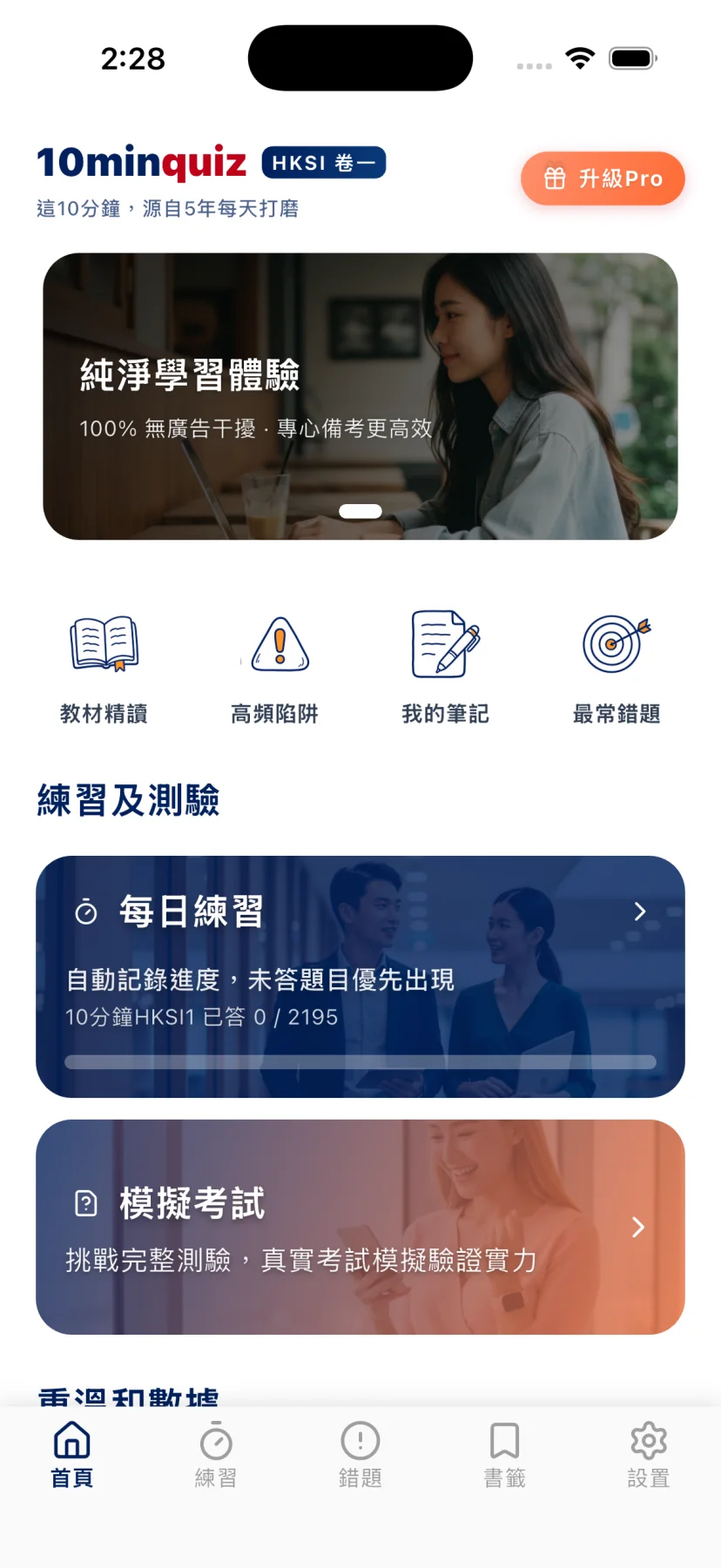
Want to practise all three at once? The HKSIPapers app links Papers 1, 7 and 8 by chapter to original practice questions, bilingual display and wrong-question review, with Paper 1 study notes, Paper 7 and Paper 8 — from the regulatory base right through to trading practice. Plan enrolment and your study timeline alongside the HKSI LE exam guide.
HKSI PAPER 1
Choose your next step
Official sources used
Use these primary sources to confirm any change after the article date.